
The Golden Age of Metadata
Vectors, XMP, EXIF, IPTC, JSON, Avro, Parquet, Big Data—the list grows and expands with every new technology. Leveraging and storing metadata is not a new concept.
Already in Ancient Greece, the scholars of the Library of Alexandria realized that as the amount of written scrolls grew, a better system was needed to locate the content. The solution came from Callimachus with his invention of the Pinakes (tables). He attached small parchment slips to each scroll, recording the author’s name, the title, and a brief summary of the content. Fast-forward to 1967: Philip Bagley coined the term “metadata” to describe the large data sets handled by early computers. Since then, the pace has only accelerated.
Every day, approximately 402.74 million terabits of data are created worldwide. Metadata accounts for about 30 million of those terabits. To simply view the metadata created in a single day, you would need to sit in front of a television for 342,465 years. Every small and medium-sized organization produces roughly 10–100 GB of metadata daily.
Every email, login, created file, photographed image, recorded video, and generated document adds its own drop to the data lake. Navigating this lake requires the right tools. The ever-growing use of artificial intelligence only increases the volume of this data exponentially, adding a new challenge to the equation.
In the middle of this data lake, your task is to sail a boat, searching for one specific drop that was added three years ago. You start from the shore, but you are instantly lost. You see the water directly beneath your boat and all around you, yet you have the slightest idea where to go next. Port or starboard?
The master of metadata wins, especially in the future.
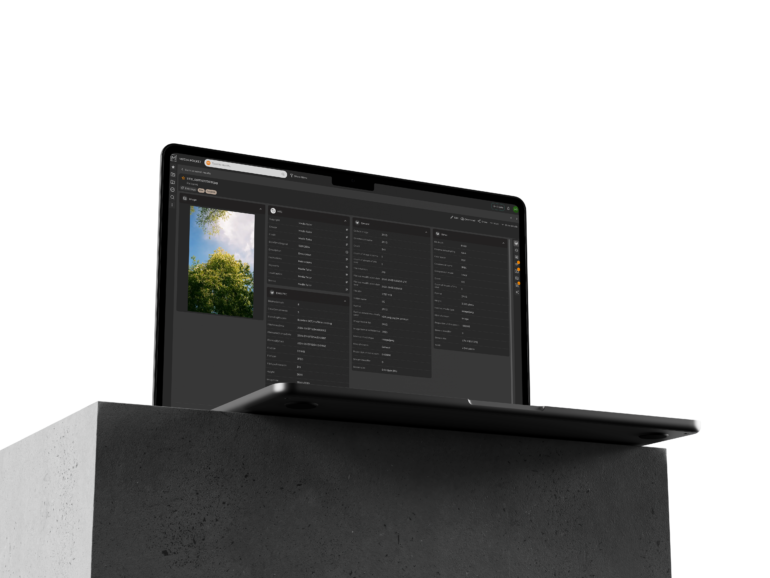
Organizations will increasingly need expertise in data storage and reusability. Not all created data will hold great value, but the most important data must be findable with minimal effort.
Every media house will effectively become its own data center. The better you can analyze content, and identify relationships between different pieces of content, the more efficiently you can drive both daily production and strategic decision-making.
Now, more than ever, it is time to consider what information is produced daily, how it can be utilized to maximum benefit, and how it will be stored in the future. Creating a data strategy is essential if an organization wishes to keep pace with the development.
Building a data strategy requires dedicated resources. It should be designed to account for the organization’s diverse stakeholders, existing tools, and business objectives.
A good data strategy is a flexible, living roadmap. It ensures that data processes are clear and documented, that technology and tools are scalable and aligned with business goals, and that staff are committed and aware of their roles. With these measures in place, all content and metadata entering the data lake become easy to navigate.
Be the Callimachus of your own organization, do not drown in the data lake.

Kristian Lauronen is Head of Media Management Solutions at Media Tailor Group. He has a strong background in SaaS product management and a deep understanding of leading development teams and projects.
At Media Tailor, he is responsible for the development of our media management product portfolio, serves as the head of our product development team, and leads our clients’ development and integration projects.
Related articles
 Blog
Blog Keskitetyn sisällön, metadatan ja tekijänoikeustietojen voima
Media Tailor ymmärtää haasteet, joita sisällöntuottajat ja jakelijat kohtaavat oikeuksien hallinnassa ja digitaalisen sisällön kaupallistamisessa.

 RUSSMEDIA
Tiedostojen ja muutoksen hallintaa Suomesta Itävaltaan – mediajätti Russmedia valitsi Media Pocketin ratkaisuksi digitaaliseen aineistonhallintaan
Media Tailorin ja itävaltalaisen Russmedian yhteistyön pohjalta syntyi ratkaisu, joka…
 Blog
Blog 10 ennustusta media-alan vuoteen 2026
COO Markus Paul jakoi näkemyksensä ja ennustuksensa vuodelle 2026.
 News
News Kehittyvää uutismediaa Media Pocketin avulla
Olemme päässeet aloittamaan yhteistyön kolmen upean uutismedian kanssa, kun Turun Sanomat, Kiinteistömedia ja Rantapohja vastataat alan muutoksiin Media Pocketin avulla.